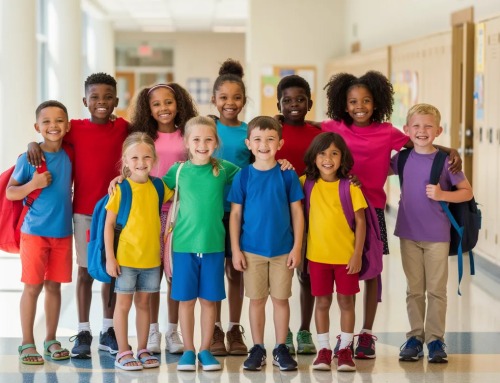
Every school photo day carries a simple promise: we see you, and you matter here. But for too many students, the actual experience tells a different story. Crowded hallways, harsh flashes, rigid poses, mislabeled names, and setups that ignore mobility needs or cultural expression can turn what should be a positive ritual into a source of stress or erasure. This guide walks school leaders, PTA organizers, and educators through the concrete steps that make inclusive school photography work in practice, not just in principle.
Key Takeaways
- Inclusive school photography means every student feels seen, respected, and accurately represented in class and yearbook images, promoting respect for diverse identities across the school community.
- Specific practices matter: accessible locations, flexible scheduling, sensory-aware setups, and culturally respectful posing and styling guidance are the foundation, with authenticity, agency, and accessibility as core priorities.
- Thoughtful communication with families, especially in multiple languages, is essential to a smooth and welcoming photo day.
- Planning must be intentional and start early, including pre-event surveys, diversity goals, and coordination with counselors and special education staff.
- Partnering with an experienced photographer like Headshots by Gareth helps schools turn these principles into a low-stress, high-quality photo experience where every student is treated as an individual.
What Inclusive School Photography Really Means
Think about the last set of school portraits your building produced. Were there students who dreaded the day? A child who sat out because the setup felt overwhelming? A student whose name was misspelled on the proof, or whose cultural hairstyle was treated as something to “fix”? These are not edge cases. A large-scale Canadian study of over 15,600 secondary students found that 63.4 percent reported feeling uncomfortable at school for at least one reason, and appearance topped the list at nearly 30 percent. Issues related to race, culture, disability, and gender identity followed closely behind. School photography sits squarely inside that experience of being seen, or not.
Inclusive school photography requires intentional steps to represent diverse students and communities. It is not a vague aspiration. It is a defined set of practices: physically accessible setups, informed consent from families, flexibility for neurodivergent and disabled students, and genuine respect for cultural, gender, and religious expression. Authentic representation in photography shows inclusion in action and respects identities rather than flattening them into a single visual template.
Crucially, inclusion operates on two levels. The first is logistical: where photos are taken, when they are scheduled, how equipment is arranged, and what accommodations are offered. The second is emotional: whether students feel comfortable, unpressured, and accurately portrayed. A student might be physically present in a group shot but still feel excluded if they were rushed through a line, forced into a gendered pose, or photographed under lighting that washed out their skin tone.
In typical New York City school contexts, whether public, charter, independent, or after-school programs, the student body may include dozens of home languages, students with IEPs, and families from widely varied religious and cultural traditions. Best practices in photography help reflect the true diversity of the student body in these settings, and respectful representation fosters a positive school environment for all. Diverse representation also enhances student engagement in school photography because students who see themselves accurately reflected are more likely to value the experience.
Headshots by Gareth approaches school photography with the same preparation, collaboration, and individual attention given to professional headshots. That means understanding each school’s community before the camera comes out, and treating every portrait session as a partnership rather than an assembly line.

Planning an Inclusive Photo Day From the Start
Inclusive photography involves strategic planning that begins well before the photographer arrives. Starting two to three months ahead gives your team the time to coordinate logistics, communicate with families, and anticipate accommodations. Here is a practical roadmap.
- Form a small planning group that includes at least one administrator, a teacher familiar with the student body, a counselor or special education coordinator, and a parent representative. This group defines what inclusion looks like for your specific community and identifies potential obstacles early. Establishing diversity goals for photography ensures balanced representation in your final visual materials.
- Send an early information pack to families in the school’s main languages. For many NYC schools, that means English, Spanish, Mandarin, Bengali, and Haitian Creole at minimum. The pack should explain photo day dates, location, available accommodations, dress guidelines (including that religious and cultural dress is welcome), and how to opt out if needed. Inclusive language in imagery releases and marketing copy respects privacy preferences and sets a professional, welcoming tone.
- Include a simple, optional form where families can share accessibility needs, sensory sensitivities, religious dress considerations, and preferred names and pronouns. This is not about collecting data for its own sake. It is about being prepared so that no student is caught off guard on the day.
- Build a schedule that avoids conflicts with major exams, religious observances, and IEP meetings. For younger grades, shorter and more frequent photo blocks work better than long assembly-line sessions. Leave buffer time for retakes and individual accommodations.
- Arrange a brief pre-event virtual meeting between the school’s planning group and the photographer. Headshots by Gareth, for example, uses these conversations to review room layouts, lighting plans, and contingency options so there are no surprises on photo day.
- Consider how student-submitted content can supplement traditional portraits. Platforms for student-submitted content can increase diverse representation in photography and give students a sense of ownership over how their school is visually documented.
Accessibility and Comfort: Making the Space Work for Every Student
The physical setup of a photo day can quietly include or exclude students long before any portrait is taken. Small decisions about space, lighting, and flow have outsized effects.
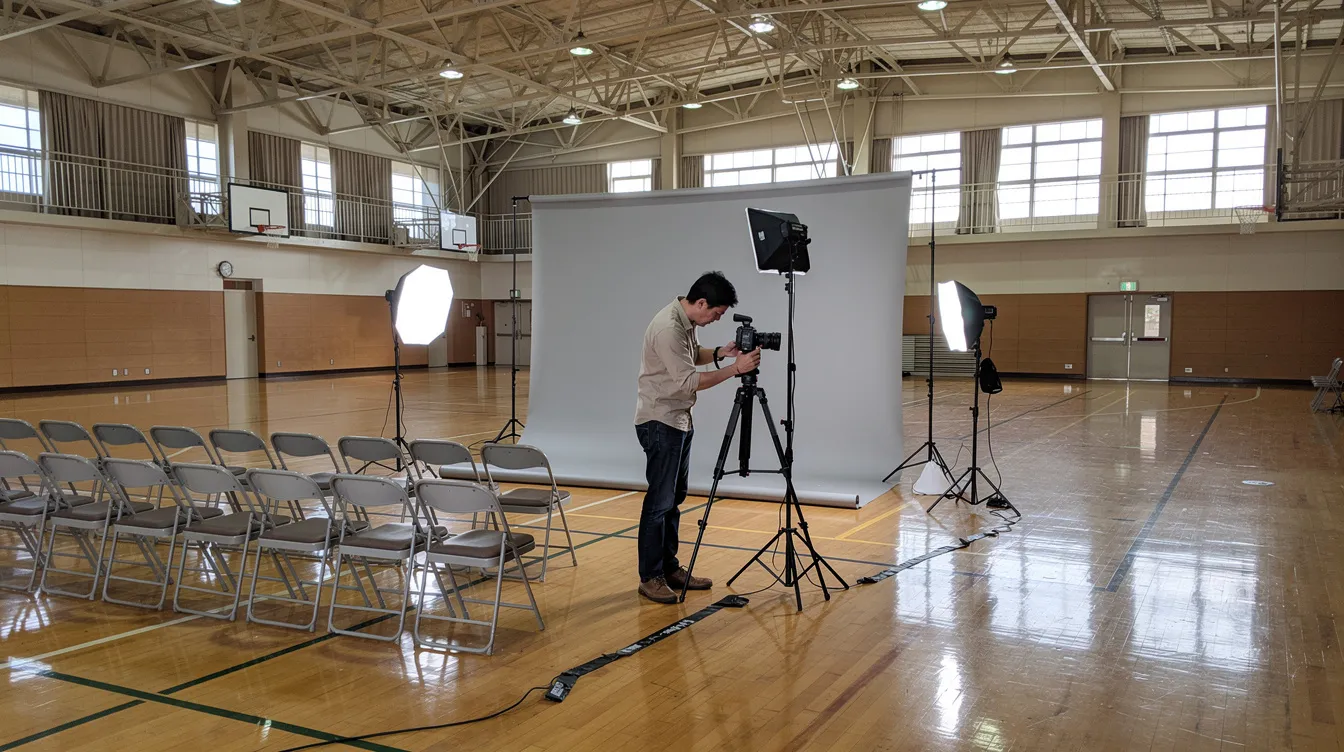
- Choose a location with step-free access, wide doorways, and nearby accessible restrooms. A school auditorium or large multipurpose room usually works well. Avoid locations that require navigating stairs, narrow corridors, or outdoor terrain that is difficult for mobility devices.
- Arrange clear, well-marked waiting areas with enough seating, visual wayfinding signs, and space for wheelchairs, walkers, and aides. Photos should highlight accessibility features such as ADA compliant signage and technology in your setup, and the environment itself should reflect that the school values access.
- Reduce sensory overload wherever possible. Softer, continuous lighting, such as LED panels with diffusers, is far less jarring than repeated camera flashes. Limit background noise by scheduling photo sessions away from gym classes or recess periods. Avoid cluttered or overly busy backdrops that distract or cause visual discomfort.
- Set up a quiet corner or “reset area” nearby where anxious or neurodivergent students can pause before or after their session without feeling rushed or singled out. This can be as simple as a chair and a few fidget items in a calm space near the photo area.
- Promotional materials should visibly show signs of an inclusive environment in photography, from the way waiting areas are organized to the tone of printed instructions. Photography should capture authentic moments of joy and belonging in educational settings, and that starts with creating conditions where joy and belonging are actually possible.
Headshots by Gareth can bring portable backdrops and adjustable lighting to adapt to tight or unconventional school spaces while retaining the quality and consistency that families expect from professional portraits.
Supporting Neurodivergent, Disabled, and Anxious Students
Many students, including autistic students, students with ADHD, and those managing anxiety, find photo day genuinely stressful. The unpredictability, the sensory input, the social pressure to smile on command: these things can turn a routine school event into a crisis. Photography styles vary for babies, children, and teenagers, and the approach that works for a confident high school senior will not work for a seven-year-old who struggles with unexpected transitions.
- Offer optional preview sessions. A short “practice pose” visit to the photo setup a day or two before the main event lets students see the space, try the lighting, and understand what will happen. This reduces uncertainty and gives the photographer a chance to learn what each student is comfortable with.
- Provide visual schedules or social stories for younger or neurodivergent students. These are simple, picture-based sequences showing each step: “First, you wait here. Then, you walk to the backdrop. The photographer will say hello. You can sit or stand. Click, and you’re done.” Research using photovoice with students with special educational needs shows that having clear expectations dramatically reduces stress.
- Build flexibility into the schedule. Early-morning or quieter time slots should be available for students who are easily overwhelmed, and extra time per student should be planned rather than treated as an exception.
- Allow trusted adults, whether paraprofessionals, therapists, counselors, or family members, to be nearby during the shoot. For some students, a familiar face in the room is the difference between a successful portrait and a meltdown.
- Inclusive alternatives should be offered for students with photography restrictions or who simply cannot participate on the main day. This might mean a private session, a different format, or an option to submit a family-provided portrait.
Representation in photography helps children feel valued and seen, and that includes children whose needs are not visible. An experienced photographer like Headshots by Gareth uses calm, step-by-step direction, gentle humor, and alternative posing options for students who struggle with eye contact or traditional smiles. The goal is a portrait that feels like the student, not a portrait that forces the student into someone else’s idea of how they should look.
Respecting Culture, Religion, Gender Identity, and Personal Expression
Students arrive at photo day wearing hijabs, turbans, kippot, braids, locs, natural hair, and cultural dress. They arrive with affirmed names that may differ from legal records, with pronouns that matter to them, and with identities that deserve the same respect given to any adult sitting for a professional portrait. All identities in photography should include varied races, cultures, and gender expressions, and this is not optional.
- Never pressure a student to remove or change religious head coverings, cultural garments, or hairstyles for the sake of “uniformity.” Communicate clearly to families before photo day that religious and cultural dress is welcome, and that images will not be digitally altered to remove these elements. Culturally specific activities in photography need to be accurately and respectfully represented, not sanitized or edited away.
- Honor students’ affirmed names and pronouns. Update class lists in advance and ensure that the photographer, line-up coordinators, and yearbook editors all work from the same corrected roster. Misgendering or deadnaming a student during a line-up or on a printed label is a failure of planning, not just sensitivity.
- Offer gentle, non-gendered posing guidance. “Try turning your shoulder slightly” works for everyone. “Pose like a boy” or “pose like a girl” does not. Give students options so they feel ownership over how they appear.
- Using diverse models in sample galleries and promotional materials promotes inclusivity in educational settings and signals to families that the school and photographer understand visual equity.
- Invisible forms of diversity can be represented through subtle visual cues in photography. A student’s pride pin, a cultural bracelet, or a small personal item can speak volumes without requiring explanation, and subtle visual cues can help minority students feel represented in photography even when their identities are not immediately visible.
Headshots by Gareth treats each student as an individual portrait client, asking simple permission-based questions like “Is it okay if I adjust your collar?” instead of touching or rearranging students without consent. That level of respect is standard in professional headshot work and should be standard in schools too.

Communicating With Families Before and After Photo Day
Trust between schools and families is built through specifics, not generalities. When families from marginalized communities see that a school has thought carefully about photo day accommodations, it strengthens the relationship far beyond a single event.
- Send clear, multilingual notices at least three to four weeks ahead of photo day. Include dates, dress guidelines, accessibility options, and opt-out procedures where required by district policy. Captions and details in photography must be verified for accuracy regarding names and pronouns, and this starts with the information families provide.
- Use multiple communication channels. Email alone misses families who rely on printed letters in backpacks, SMS alerts, or the school app. The goal is ensuring every caregiver sees the information, not just those who check their inbox regularly.
- Be explicit about inclusive practices in your communications. Saying “students may wear religious or cultural dress” and “quiet accommodations are available for students with sensory needs” tells families their children’s needs have been considered. This specificity matters more than broad statements about welcoming everyone.
- After photo day, communicate timelines for proofs and explain how to request retakes for issues like blinking, sensory overload, or absence. Provide a clear process for flagging name or pronoun errors on labels before images go to print.
- Descriptive alt text must accompany digital imagery for accessibility when photos are shared on school websites or apps. This is both a legal best practice and a signal that the school considers accessibility across every channel. Photography context must be appropriate for its placement in publications or on websites, meaning images selected for the school newsletter may differ from those shared on social media.
Headshots by Gareth can provide simple online galleries or proofing systems that are easy for busy parents to navigate on a phone, with clear instructions provided by the school for reviewing and approving images.
Inclusive Yearbook and Class Group Photos
Inclusion does not end with individual portraits. How group images and yearbooks are designed determines whether the school’s visual record reflects the full community or quietly erases parts of it.
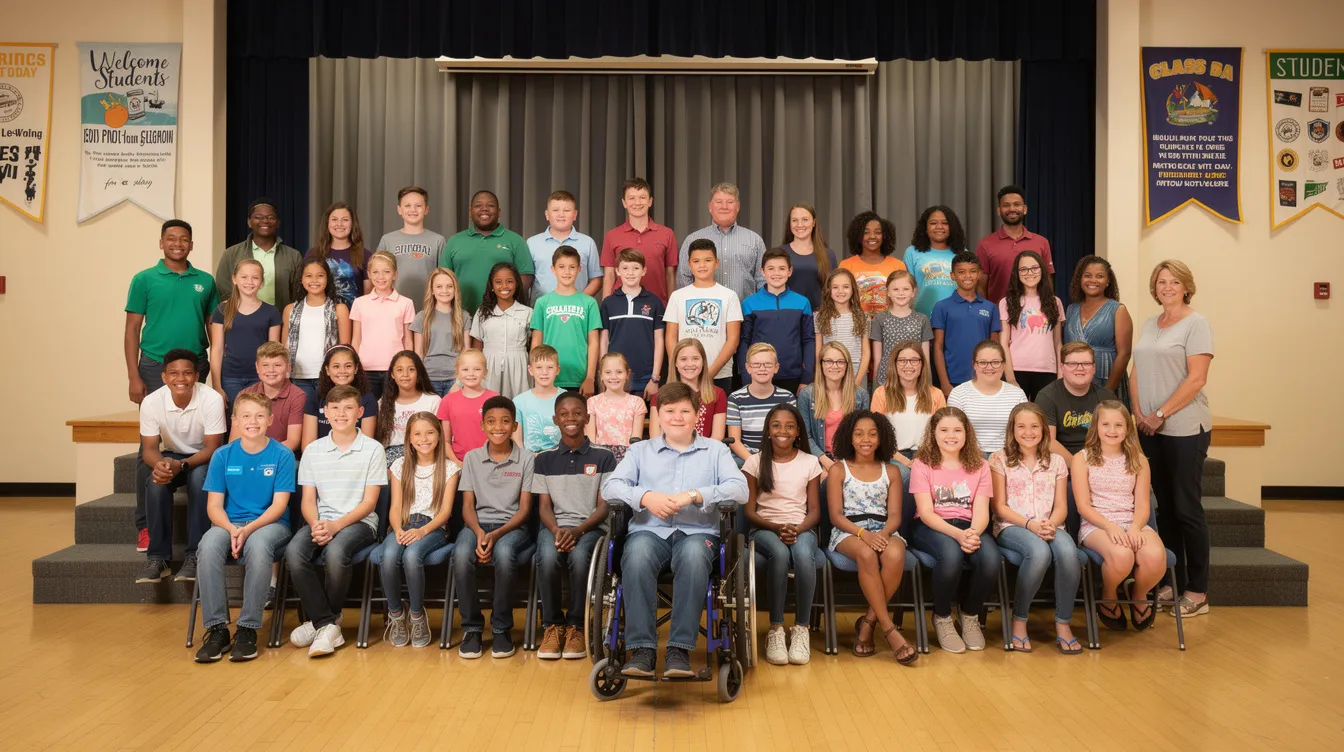
Horizontal photography is popular for group school portraits, while vertical photography is often used for individual student photos. Square formats are suitable for social media sharing, and panoramic styles capture larger groups effectively. Choosing the right format for the right purpose is a small technical decision with real inclusion implications. A panoramic class shot where a wheelchair user is cropped out at the edge is not a formatting issue; it is an exclusion issue.
- Arrange class photos so that students who use wheelchairs, walkers, or other mobility aids are placed naturally among their peers, not isolated at the border. Dutch school photography guidelines recommend integrating students with mobility aids within groupings and using lighting that avoids harsh shadows on darker skin tones.
- Take multiple versions of group shots when needed. Standing, seated, and mixed-height arrangements let everyone be comfortably included and clearly visible. Collaborative learning activities should be photographed to show diversity in group work, not just formal lineup shots.
- Avoid digital “cut and paste” solutions that single out absent or disabled students. Instead, schedule make-up days or use inclusive collage layouts that integrate all students naturally.
- Natural candids should replace posed, static group photos in inclusive photography whenever possible. Photojournalistic approaches focus on genuine moments rather than staged group shots, and the resulting images often feel more alive and representative of actual school life. Photography should capture authentic moments of joy and belonging in educational settings, not just stiff rows of forced smiles.
- Diversity in photography should include a range of clubs and activities beyond major sports. Yearbook coverage that only features football and cheerleading misses the robotics team, the debate club, the art room, and dozens of other spaces where students build identity and community. Diverse stories in photography can celebrate different backgrounds and foster connection across the school.
- Yearbook editors should review names, captions, and pronouns carefully, using the same accuracy standards agreed upon for photo labels.
Headshots by Gareth can offer guidance on group composition and consistent lighting so that class photos look cohesive and professional while remaining genuinely inclusive. Proper lighting technique for diverse skin tones, including positioning subjects with darker skin tones closer to the light source and using fill reflectors, ensures every student is rendered with accurate detail and warmth.
Data Privacy, Consent, and Safe Use of Images
Between 2024 and 2026, scrutiny around student data and online image use has increased significantly. Schools that treat consent as a checkbox exercise risk both legal exposure and family trust.
- Review district policies and local regulations on photographing minors, consent forms, and permissible uses of images. In the United States, FERPA protects student educational records, and photos that include identifying information may qualify. New York’s Education Law §2-d adds additional protections for personally identifiable information. Minors cannot legally sign consent forms; parents or legal guardians must provide written permission.
- Opt-in or opt-out forms should be specific about where images will appear. “Printed yearbooks only” is different from “password-protected parent portal” is different from “public Instagram account and school newsletter.” Families deserve to know exactly which channels their child’s image may reach.
- Use secure delivery methods for digital files, with access limited to authorized staff and families. Establish timelines for how long images are stored and by whom.
- Share these standards with your chosen photographer and include them in any written agreement. Privacy expectations should be documented, not assumed.
A professional like Headshots by Gareth is accustomed to working within strict privacy frameworks, including not using student images in public portfolios without explicit school and family permission. This is standard practice, not a special accommodation.
Choosing an Inclusive School Photographer
Not all photographers are equally prepared for the complexity of inclusive school work. A photographer who produces beautiful corporate headshots may have no experience working with young children, neurodivergent students, or multilingual families. The questions you ask during selection determine the quality of the experience your students will have.
- Ask about specific experience with school communities, including special education programs, multilingual families, and LGBTQ+ student populations. Inclusive school photography reflects various cultural backgrounds, and a photographer who has only worked in homogeneous settings may not have the skills or awareness your community needs.
- Request sample galleries that show a diverse range of students, body types, skin tones, and hair textures, all lit and edited well without heavy or artificial retouching. If the samples all look the same, that tells you something.
- Ask about accessibility practices: flexible session timing, comfort with mobility aids in the frame, and strategies for anxious or neurodivergent students.
- Include questions about data security, consent management, and how the photographer labels files. A mislabeled file that deadnames a student or assigns the wrong pronoun can cause real harm.
- Photo contests can encourage diverse submissions from a broader range of students and add another layer of representation to your school’s visual identity. Ask whether your photographer can support or advise on these initiatives.
- Best Practices for Inclusive and Diverse Photography can provide further guidance as you develop your school’s standards and evaluate potential partners.
If you are planning an upcoming photo day, reach out to Headshots by Gareth to discuss how the same thoughtful, person-centered approach used for professional New York headshots can be adapted to your school community. The conversation itself will tell you whether the fit is right.
FAQ: Inclusive School Photography
How early should schools book an inclusive photographer?
For New York City schools, the fall season is the busiest window for school portraits. Ideally, you should begin reaching out to photographers four to six months before your target photo day, especially if your school requires accommodations like quiet sessions, multilingual communication support, or flexible scheduling across multiple days. Booking early also gives you time for the pre-event planning meetings that make inclusive photo days run smoothly. Headshots by Gareth welcomes early conversations so that logistics and inclusion goals can be aligned well before the camera comes out.
What should we do if a student refuses to be photographed?
Respect the boundary. A student who refuses may be dealing with anxiety, trauma, sensory overload, religious restrictions, or simply a bad day. Offer gentle encouragement but never force participation. Let the student know they can try again later or on a make-up day. If a family has specific photography restrictions, inclusive alternatives should be arranged, such as a private session or a family-provided image for the yearbook. The goal is always consent, not compliance.
How do we handle retakes for students who were absent, ill, or overwhelmed?
Schedule a dedicated retake day, ideally within two to three weeks of the original photo day, and communicate it to families promptly. For students who were overwhelmed, offer a quieter, lower-pressure session rather than simply repeating the same stressful environment. Some schools find that a small-group or individual session on a different day works far better for these students. An experienced photographer will adapt the setup for retakes without compromising consistency with the original portraits.
What kind of retouching is appropriate for school photos?
Light, respectful edits are standard: adjusting exposure, correcting color balance, and minor sharpening. What is not appropriate is altering a student’s skin tone, removing cultural hairstyles, digitally erasing religious garments, or smoothing features in ways that change how a student actually looks. The guiding principle is that the final image should look like the student, not like someone else’s idea of what the student should look like. If a photographer’s editing style consistently lightens skin or removes natural features, that is a red flag.
Can Headshots by Gareth adapt these inclusive practices to our specific school?
Every school community is different, and that is exactly the point. Whether your school serves 200 students or 2,000, whether your population is primarily Spanish-speaking or spans a dozen home languages, and whether you need accommodations for a robust special education program or flexible scheduling for religious observances, the approach can be tailored. The best way to find out how these practices apply to your school is to start a conversation. Contact Headshots by Gareth to discuss your upcoming photo day and explore what an inclusive, professional experience looks like for your students and families.