The days of fuzzy, cropped conference snapshots standing in for official faculty photos are over. Today, a strong academic profile starts with a portrait that looks intentional, current, and consistent with the institution it represents. This guide walks through everything universities, departments, and individual academics need to know about faculty headshots-from planning large-scale department sessions to choosing what to wear on photo day.
Key Takeaways
- Faculty and staff headshots are now a core part of academic branding, appearing on university websites, conference bios, grant applications, and scholarly profiles. Headshots by Gareth in New York specializes in this work for institutions across the city and beyond.
- Departments can plan a consistent portrait style for faculty and staff by defining visual standards, scheduling on-campus or studio sessions well in advance, and managing organized delivery of finished files to web and communications teams.
- Practical guidance on what to wear, how to prepare, and how to choose between studio backdrops and environmental campus locations helps professors and students arrive confident and ready.
- Professional headshots differ from DIY photos in lighting quality, expression coaching, and file formats suitable for university CMS platforms, print materials, and social profiles.
- An FAQ at the end of this article addresses logistics, group booking for entire departments, retouching standards, and how often faculty and staff should update their portraits.
Why Faculty and Staff Headshots Matter in 2026
Since roughly 2020, the way academics present themselves has changed in a fundamental way. Virtual conferences became routine, Zoom office hours replaced in-person drop-ins, and online faculty directories moved from a nice-to-have to the primary way prospective students, journalists, and collaborators encounter a department. What was once a name next to a publication list is now expected to be a face-and a professional one at that.
Nearly every university in New York and across the United States now maintains a searchable online directory where a professional headshot sits alongside titles, research interests, publications, and contact details. Schools like City Tech (CUNY) have gone further, requiring that faculty photos older than five years or no longer meeting quality standards be replaced. Binghamton University offers headshot appointments during New Faculty Orientation each August, treating portraits as part of the onboarding process rather than an afterthought.
Faculty and staff headshots support trust and recognition across multiple audiences. When a prospective student browses a department page, a polished portrait signals that the institution takes its people seriously. When a reporter looks up a professor for a quote, a clean, current photo makes the difference between being featured and being skipped. Donors, grant reviewers, and conference organizers all form impressions based on visual presentation-often before reading a single word of scholarship.
The use cases extend well beyond a single directory page. Faculty headshots appear on Google Scholar and ORCID profiles, conference speaker pages, book jackets, LinkedIn profiles, alumni magazine features, and grant or fellowship submissions. Each context has slightly different image size requirements, but all of them demand a photo that looks sharp, authentic, and consistent with the person who shows up on camera or at the podium.
Headshots by Gareth is a New York–based photography studio focused on academic and professional headshots rather than generic event photography. The studio works with universities, departments, and individual academics to create portraits that meet institutional standards while reflecting each person’s identity and discipline.
Core Elements of a Strong Academic Headshot
A strong academic portrait is more than a well-lit snapshot. It combines several visual components-lighting, background, pose, expression, and composition-into a single image that communicates competence, warmth, and approachability. Understanding these elements helps departments set expectations and helps individual faculty arrive at their session with clarity about what the process involves.
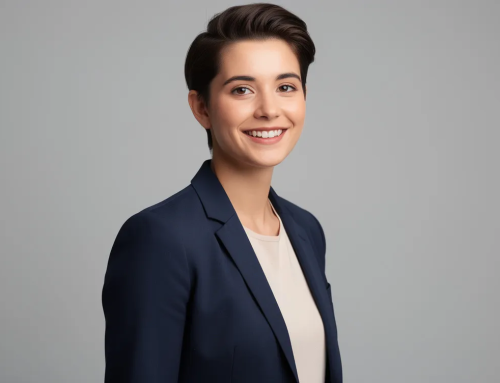
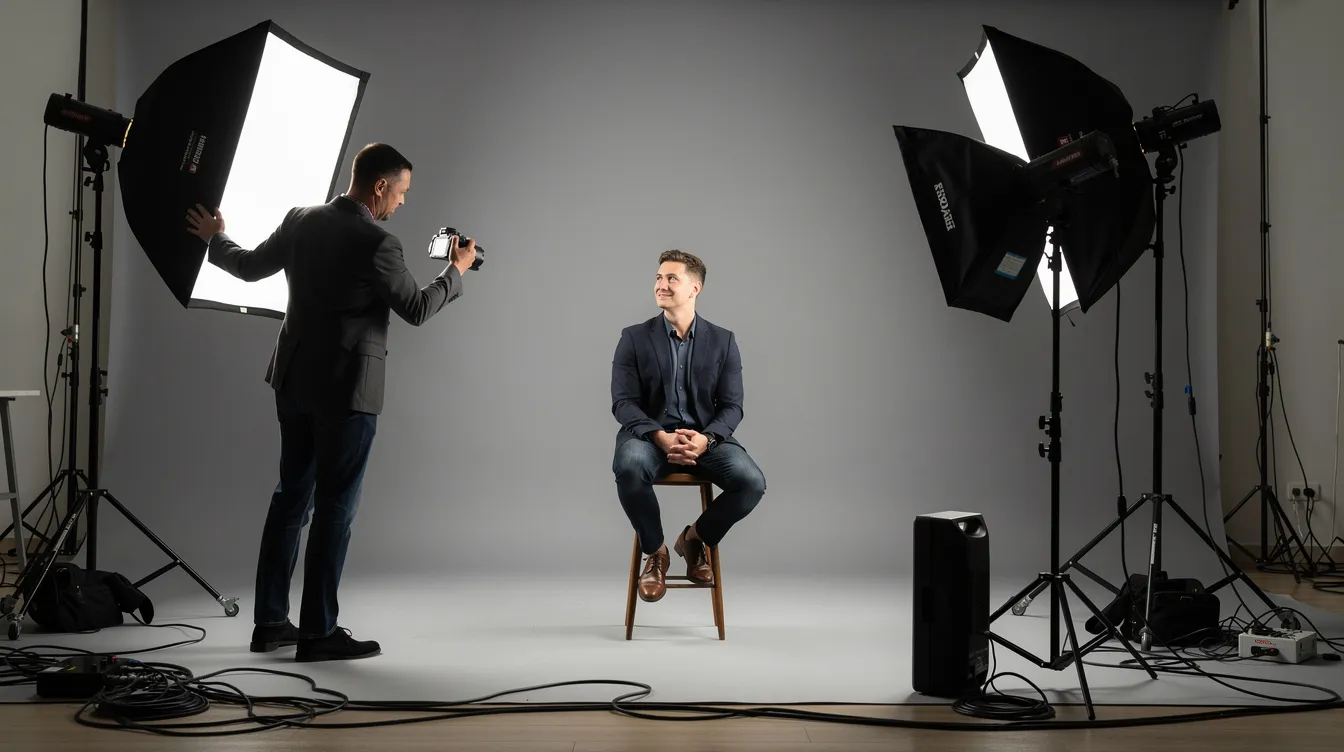
Consistency in lighting creates professional headshots that look unified across a department page. Soft, diffused light is the foundation. Harsh overhead fluorescents or direct sunlight create unflattering shadows under the eyes and chin, while a carefully balanced key-and-fill setup keeps faces evenly lit with gentle dimension. A hair or rim light is often added to separate the subject from the background, giving the portrait depth without distraction. Standardizing background and lighting achieves visual consistency in headshots that might otherwise look mismatched when displayed side by side on a university website.
A neutral background keeps the focus on the individual in headshots. Medium gray, soft white, and muted tones are standard choices because they complement a wide range of skin tones and attire without competing for attention. Some departments prefer a slightly environmental approach-a shallow-depth-of-field view of bookshelves or campus architecture-but even then, the background should remain secondary to the face.
Using a lens over 70mm helps create flattering portraits. Most professional photographers working in this space use an 85mm focal length (or equivalent) at apertures between f/2.8 and f/5.6, which produces a sharp face against a softly blurred backdrop. The frame typically crops from mid-chest to just above the head, with the eyes positioned about one-third from the top edge-a composition that works at multiple sizes, from small directory thumbnails to large hero images on research-center pages.
The difference between a generic portrait and a professional headshot tailored to academic audiences often comes down to intent. A headshot for a faculty directory might allow a slightly looser crop to show a bit of context-a lab bench edge, a whitewashed brick wall-while a tighter crop suits a grant bio or conference program. Natural-light outdoor portraits taken on campus can add storytelling and a sense of place, but they require more coordination around weather and background clutter. Controlled studio lighting in a dedicated photography studio delivers repeatable results, which matters when photographing dozens of people across several sessions.
Headshots by Gareth routinely delivers files optimized for both print and web, ensuring clear reproduction in brochures, conference programs, and university magazines. Whether the image ends up as a 100-pixel thumbnail or a full-page spread, the technical quality holds up.
Planning Faculty and Staff Headshots at the Department Level
Organizing a portrait initiative for an entire department can feel daunting, but with clear timelines and a simple plan, the process runs smoothly. Department chairs, communications directors, or administrative coordinators are typically the ones who set the work in motion, and the most important step is starting early.
Contact the photographer four to eight weeks before a major deadline-a website redesign, accreditation review, or the start of a new academic year. This lead time allows enough room for scheduling, internal communications, and any logistical coordination with campus facilities. At institutions like UHCL, professional headshots are offered twice per semester, while Tulane University provides free sessions once per month, appointment-based. These recurring models reduce the pressure of a single large-scale photo day and let faculty choose a time that fits their schedule.
Before the first session, define visual standards. Decide on preferred backdrop colors, whether images should be horizontal or vertical (or both), and whether staff headshots should match faculty portraits stylistically. Using the same photographer across all sessions ensures a consistent artistic style that holds together on a department page. A simple internal brief should list participants, job titles, preferred locations (on-campus versus studio), and any accessibility or scheduling constraints. This document becomes the roadmap for the photographer and the department coordinator alike.
Appointments for faculty portraits are commonly set in 15-minute intervals, which keeps the day moving efficiently while giving each person enough time to settle in, adjust their attire, and capture multiple frames. At many institutions, such as the University of Maryland, faculty portraits are taken by appointment only, and Georgia Tech offers headshots every Tuesday from 11 a.m. to 2 p.m. These structured windows prevent bottlenecks and make the process predictable for everyone involved.
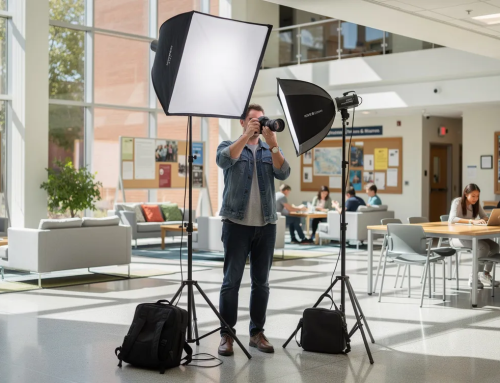
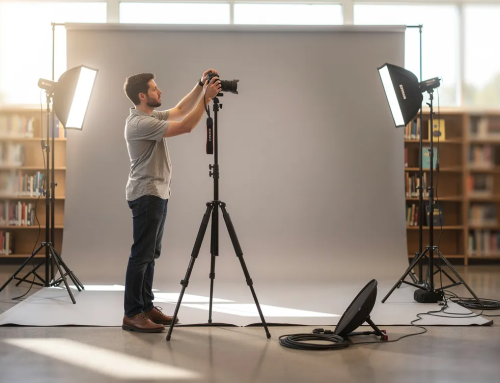
Headshots by Gareth can either host individuals in the New York studio or set up a mobile photography studio in a campus conference room or lecture hall. For large departments, mobile setups bring lighting, backdrops, and all necessary equipment directly to the building, minimizing the time faculty spend away from their offices. The photographer coordinates with one department contact to map out the day, confirm the participant list, and send preparation guidelines to faculty and staff in advance.
On-Campus vs. Studio Sessions in New York
The choice between a dedicated photography studio and an on-campus location shapes both the look of the final portraits and the logistics of the session. Each approach has clear strengths, and the right choice depends on how the department wants its directory to function visually.
Studio sessions offer controlled lighting, multiple backdrop options-medium grey, deep blue, soft white-and consistent results that are ideal for large faculties where every portrait needs to feel like part of the same set. The environment is distraction-free, the lighting setup is optimized for portraiture, and the photographer can move through appointments efficiently without worrying about ambient light changes or background clutter. For individuals who need flexible appointments outside of a department-wide photo day, visiting the studio on a date and time that works for them is often the simplest path.
On-campus sessions bring a different energy. Environmental portraits can feature recognizable New York locations-historic campus gates, modern glass atriums, tree-lined quads, or even a city skyline framed through a window. These images tell a story about the institution and the person’s place within it. They work especially well for marketing materials, school websites, and alumni publications where context matters. The trade-off is coordination: the photographer needs to check room size for lighting setups, confirm access to power outlets, and work with campus facilities or security for building access. Weather is a factor for outdoor shoots, and the session site should be scouted in advance to avoid construction zones or other visual distractions.
Headshots by Gareth can schedule half-day or full-day blocks on campus to photograph entire departments, research groups, or administrative teams. For institutions that want strict brand consistency, studio sessions are the clear choice. For departments that want a more relaxed, storytelling approach, campus settings add a layer of authenticity. Some departments split the difference: a studio backdrop for the official directory and a campus-environment option for the department’s marketing page or annual report.
When planning an on-campus session, confirm the room early. A conference room on a quiet floor with controllable overhead lighting and enough space for a backdrop stand works well. Make sure directions to the location are clear-include the building name, floor number, and notes about elevator or ramp access so everyone can arrive without confusion.
Preparing Faculty and Staff for Their Professional Headshot
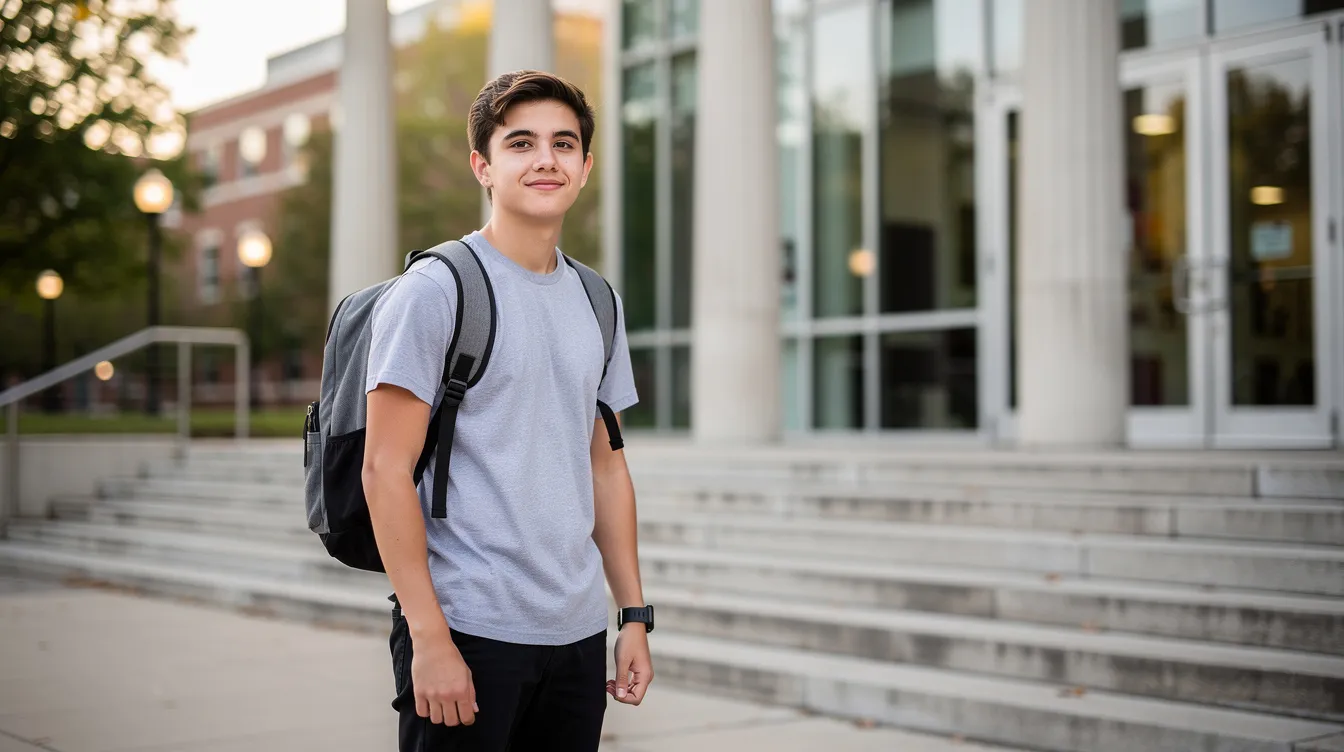
The most common source of anxiety about headshots isn’t the photo itself-it’s not knowing what to expect. A short, clear preparation email sent to all participants a week before the session dramatically reduces no-shows and stress. Here is what that communication should cover.
Grooming timelines matter. Haircuts should happen at least five to seven days before the session so the cut has time to settle into a natural shape. Light touch-ups on the day of are fine-taming flyaways, applying a modest amount of product-but avoid dramatic changes that do not reflect everyday appearance. The goal is for the headshot to look like the person who walks into a lecture hall or sits down for a Zoom meeting, not a version that only exists on photo day.
Suggest that participants bring a backup outfit or jacket, especially for sessions happening during long teaching days when spills, wrinkles, or weather can take a toll on a carefully chosen look. A blazer folded into a tote bag takes no effort and can rescue a portrait from looking overly casual.
Small details make an outsized difference. Polishing glasses removes smudges that catch studio light. Avoiding extremely shiny makeup or heavy SPF prevents glare that the camera picks up as an unnatural sheen. Collars, ties, and lab coats should be checked for lint, creases, or stains. For faculty who regularly wear a white coat in their work, bringing it clean and pressed ensures it photographs well.
Headshots by Gareth guides posing during the session, so participants do not need prior experience or practice. A brief moment in the mirror to check that everything sits comfortably is more than enough preparation. The photographer handles the rest-angle, posture, expression.
Departments should send a friendly reminder the day before sessions with the time, location (including building and door details), and a link to preparation tips. This small step reduces anxiety, prevents scheduling confusion, and helps faculty arrive ready to capture their best portrait in minutes rather than spending extra time sorting logistics on the spot.
Headshots must be scheduled 24 hours in advance. Walk ins are not allowed for headshot sessions, so encouraging faculty to confirm their appointment early keeps the day running smoothly for everyone.
What to Wear for Faculty Headshots
Clothing choices in a headshot are about framing the face and communicating professional identity-not about following a rigid dress code. The guidelines below apply broadly, but individual departments and disciplines will have their own norms.
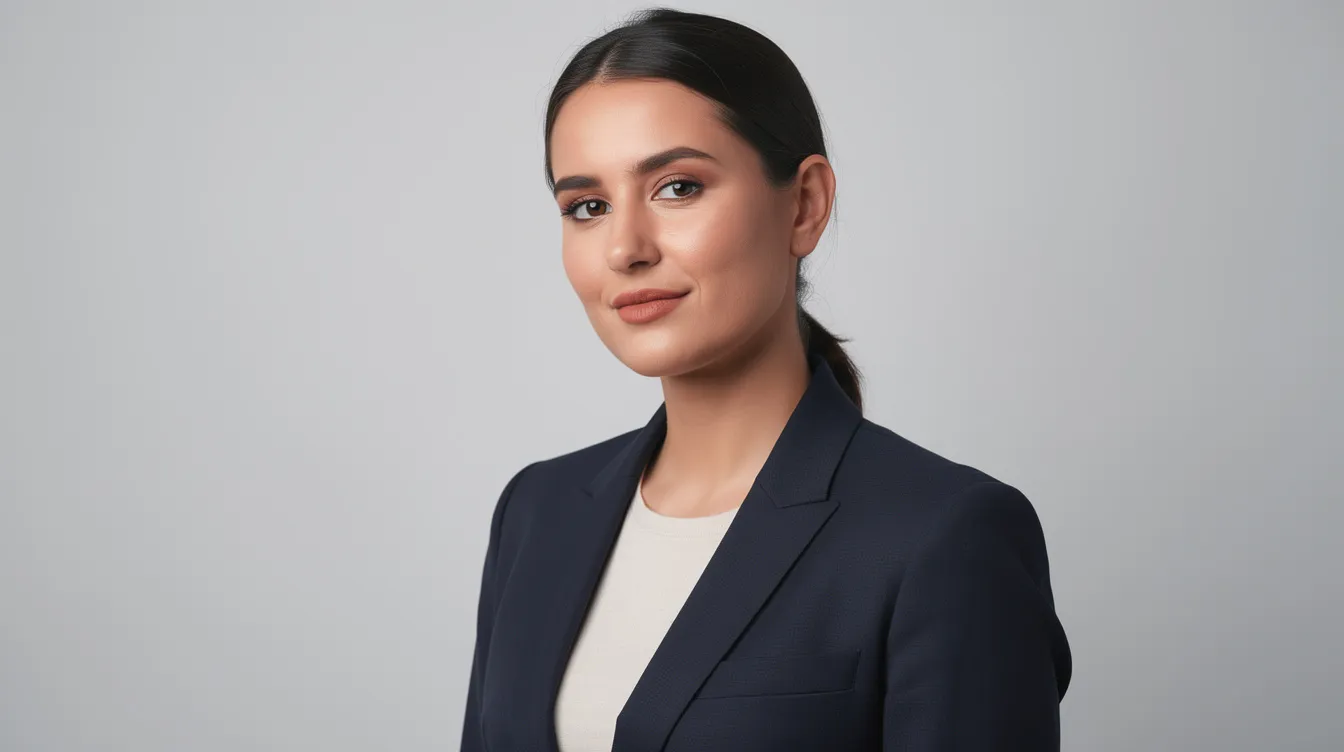
Professional attire should complement the background in headshots. That means choosing colors and textures that create gentle contrast with the backdrop rather than blending into it or clashing aggressively. Wear solid colors with muted tones-navy, charcoal, slate blue, burgundy, forest green, and similar hues photograph cleanly and keep attention on the face.
Dark suits photograph best and provide good contrast against most standard backdrops. Business jackets enhance the professional appearance in photos, even if the person wouldn’t normally wear one to teach a seminar. A well-fitted blazer adds structure to the shoulders and creates a polished silhouette without requiring a full formal outfit underneath.
Avoid bright white clothing as it looks washed out under studio lighting, pulling focus away from the face and creating exposure challenges. Sleeveless tops and t-shirts are not recommended for faculty portraits-they read as too casual for most academic directories. Extremely busy patterns, large logos, and neon colors can also distract from the subject and date the portrait quickly.
Different disciplines lean toward different looks, and that’s perfectly acceptable:
Discipline
Typical Attire
Notes
Law, Business, Public Policy
Suit or blazer with dress shirt
Tie optional; structured look preferred
Humanities, Social Sciences
Smart-casual: button-down, sweater, blazer
Softer palette, layered textures
STEM, Health Sciences
Lab coat over professional top, or blazer
White coat is appropriate when it reflects daily work
Arts, Design, Architecture
Expressive but clean: bold color, creative accessory
Still avoid busy patterns that dominate the frame
Jewelry, scarves, and accessories should remain understated so the face and expression stay as the focal point of the portrait. A simple necklace, a pair of stud earrings, or a pocket square can add personality without competing for the viewer’s attention. For women who prefer scarves or headscarves, choosing a solid or subtly patterned fabric in a complementary tone works beautifully on camera.
Headshots by Gareth can provide sample outfit guides and example photos before photo day so departments can align expectations, reduce last-minute wardrobe questions, and help everyone feel confident about what to wear.
Coordinating Student Headshots for Graduate and Professional Programs
Student headshots are increasingly important beyond the faculty directory. PhD candidates, postdoctoral scholars, and professional students in law, medicine, and public policy all benefit from a polished portrait that can be used on department websites, LinkedIn, conference posters, and job application materials.
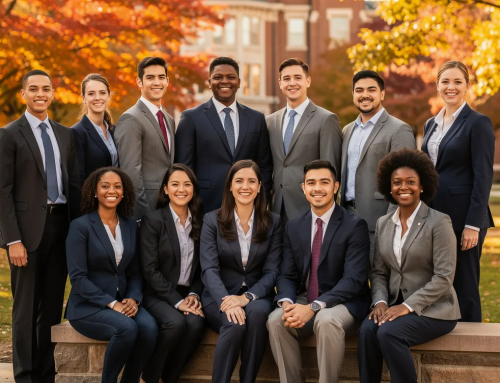
Universities in New York often host student headshot days at the start of the academic year, during orientation, or before major career fairs. These events give students access to professional photography that they might not otherwise seek out on their own. Headshots by Gareth can photograph cohorts of graduate students, teaching assistants, and fellows in one coordinated session, keeping the process efficient and the results consistent with the department’s visual identity.
Clear communication makes the difference between high attendance and empty time slots. Let students know the dress expectations, the length of each time slot, and the practical benefits of a polished headshot early in their program. Emphasize that the portraits will be useful immediately-for LinkedIn, conference submissions, and program websites-and for years to come.
Student headshots can be styled to match faculty portraits, reinforcing a cohesive look across academic programs, centers, and labs. When prospective applicants visit a department page and see a unified visual style from tenured professors through current doctoral students, it signals organization and pride.
Planning for student sessions should account for class schedules, lab rotations, and part-time work. Offering multiple time blocks-morning and afternoon-on different days helps maximize attendance. For large cohorts, a half-day session with 15-minute intervals can move through 20 or more students without anyone waiting long. Departments that coordinate student and faculty sessions together often get better value from the photographer’s time and reduce overall scheduling complexity.
Posing and Expression: Helping Academics Look Natural
Many academics describe themselves as “not photogenic” or express anxiety about being photographed. This is one of the most common concerns Headshots by Gareth encounters, and it’s also one of the easiest to address with professional direction.
Simple posing adjustments make an immediate difference. Turning the shoulders at a slight angle to the camera, rather than facing it squarely, creates a more dynamic and slimming composition. Relaxed shoulders-actively dropped an inch from their natural tense position-prevent the rigid, mug-shot look. A subtle forward lean brings energy to the image without looking aggressive. Standard poses like these improve consistency across faculty headshots while still leaving room for individual personality.
Expression coaching is where the session moves from technically competent to genuinely compelling. The goal for most academic headshots is a balance of warmth, confidence, and approachability-qualities that matter whether the portrait sits on a teaching page or a research-center profile. Encouraging friendly expressions can represent a passionate academic far more effectively than a stern, closed-mouth stare. The “squinch” technique-a slight narrowing of the lower eyelids-prevents unnatural, wide-eyed expressions and adds a sense of focus and engagement to the eyes. It’s subtle, but it makes portraits feel alive rather than frozen.
For faculty who use wheelchairs, walkers, or other assistive devices, the photographer adjusts the setup rather than asking the person to adapt. Stools and chairs are available for anyone who is more comfortable seated. Every faculty member should be photographed with the same care and respect, regardless of mobility or physical difference.
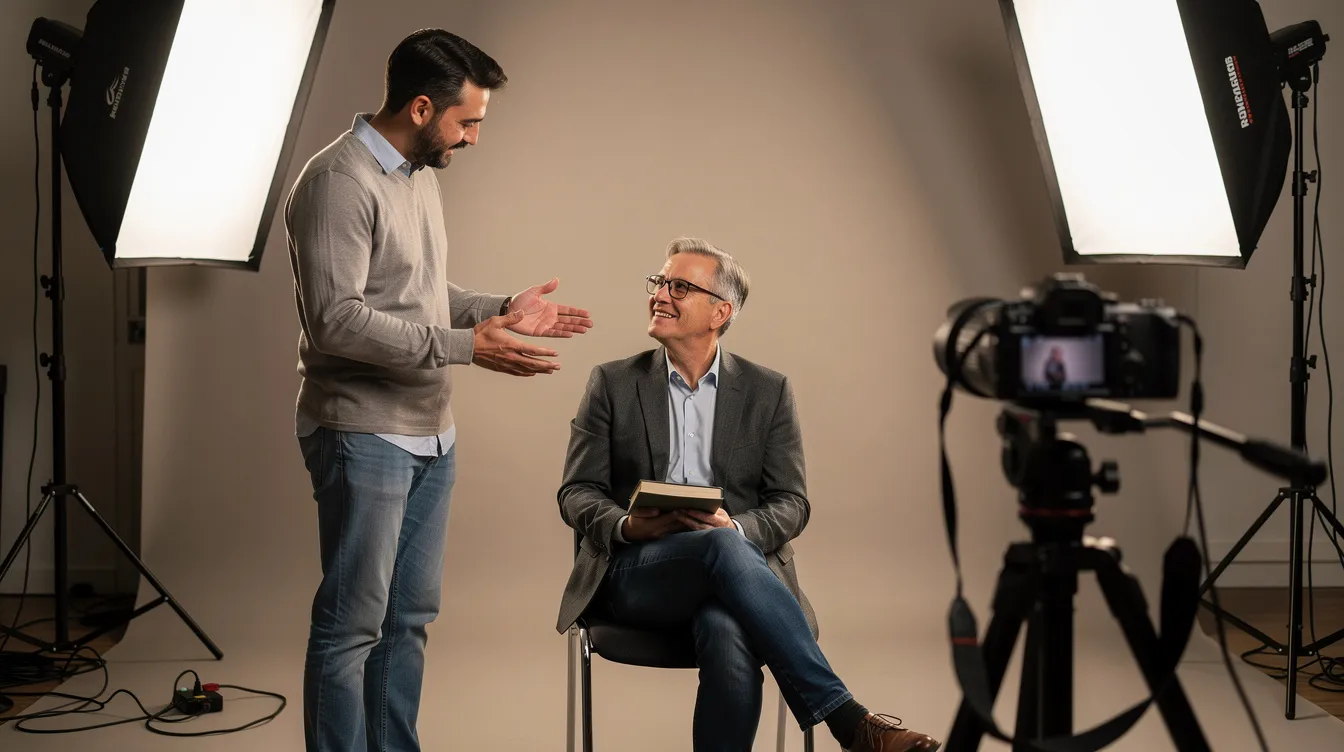
Multiple frames are captured for each person-faculty receive 1 to 8 images after their headshot session-so individuals can select the one that feels most authentic to their personality and academic work. The photographer adapts direction throughout: more energetic interaction for extroverts, quieter step-by-step cues for more reserved subjects. The result is a set of options rather than a single take-it-or-leave-it shot.
File Delivery, Retouching, and Image Management for Universities
Once the session is complete, the next question is always: when do we get the files, and what will they look like? A clear, predictable delivery process matters as much as the photography itself-especially for departments on tight timelines for website launches or accreditation reviews.
Images are typically sent within 10 business days after the session. Finished headshots should be delivered in organized folders with consistent file naming conventions. A format like lastname_firstname_department.jpg makes it easy for web teams to sort, upload, and match portraits to the correct profile pages. Files are provided in both high-resolution versions for print (suitable for brochures, conference programs, and magazines) and optimized web versions cropped for directory thumbnails, profile pages, and news features.
Applying standardized cropping helps maintain uniformity in images across a department. Final images should have the same resolution and aspect ratio for consistency, whether they appear on a 4K monitor or a printed event program. Headshots by Gareth delivers files that meet these standards so departments can download and use them without additional resizing or reformatting.
Retouching for academic portraits follows a specific philosophy: subtle, natural corrections that preserve authenticity. Standard edits include color correction, exposure balancing, removal of temporary blemishes (a scratch, a breakout), and minor background clean-up. Features like moles, scars, or birthmarks are not removed unless specifically requested by the subject. UHCL’s photography service, for example, explicitly states that they do not reshape hair, smooth skin texture, or heavily retouch-and this approach is increasingly the norm across academic institutions. Over-retouching risks creating a portrait that doesn’t match the person who shows up to teach a class or deliver a keynote.
Departments should store headshots on shared drives or a digital asset management system, with a simple spreadsheet noting each person’s name, the date the image was taken, and the session location. This makes it easy to check when portraits are due for an update and to locate files quickly for press releases, event programs, or marketing materials.
Institutions should set a policy for how often portraits are refreshed. The standard recommendation is every three to five years, or sooner following major promotions, awards, or significant appearance changes. Some institutions have also adopted self-service tools: headshots can be updated anytime without appointments using Iris, a system that captures headshots in minutes with self-guided technology, offering faculty a quick option between scheduled sessions with a professional photographer.
Accessibility, Inclusion, and Representation in Academic Portraits
Official faculty portraits collectively represent the face of a department. When done thoughtfully, they reflect the full diversity of the people who teach, research, and lead within an institution-across race, gender, age, disability, and cultural background.
Inclusive headshot practices start with logistics. Photo locations must have elevator and ramp access. There should be sufficient time between sessions so no one feels rushed, and clear signage or wayfinding information should be provided so faculty can locate the room without difficulty. Scheduling should account for religious observances, caregiving responsibilities, and teaching loads so that no group is systematically excluded from participating.
Lighting matters for representation. Proper lighting for darker skin tones requires specific attention to avoid overexposure or muted detail. Backdrop color should provide contrast, and white balance spot-checks ensure that every person’s natural tones are preserved accurately. A photographer experienced in academic portraits will adjust lighting for each individual rather than applying a single setup to every session.
Headshots by Gareth is attentive to pronouns, name pronunciations, and individual comfort levels, creating a respectful and professional environment on photo day. Religious dress, cultural expressions, and assistive devices are honored without question. Faculty who wear hijab, turbans, yarmulkes, clerical collars, or other culturally significant garments should feel welcomed exactly as they are.
Departments can support this by offering opt-in grooming or makeup resources equitably-available to anyone who wants them, without pressuring anyone to change their natural or cultural presentation. Sharing sample galleries that showcase a wide range of people helps new faculty and staff see themselves reflected in the style of portraits, reducing anxiety and building trust before the session even begins.
Working with Headshots by Gareth in New York
The typical workflow when a university or department partners with Headshots by Gareth begins with a planning conversation. This initial consultation covers the institution’s goals: how many people need to be photographed, what the current faculty pages look like, what visual direction the department wants, and which days and locations will work best for sessions.
From there, Gareth and the department contact map out a schedule. For on-campus sessions, this means identifying a room with adequate space-enough floor area for a backdrop stand and lighting, access to power outlets, and proximity to faculty offices to minimize travel time. For studio sessions, individuals book an appointment at the New York photography studio at a time that fits their calendar. The service regularly photographs professors, adjuncts, administrative staff, graduate students, and research teams across a range of disciplines, from engineering to English literature.
Gareth brings portable studio lighting and backdrops for on-campus sessions, so the department does not need to provide any equipment. The photography studio option is available for individuals who prefer a dedicated space or who need a flexible appointment outside of a department photo day. Either way, the process is scalable-from a single professor needing a quick update to a 60-person department shoot spread across two days.
The scheduling process is centralized. One department contact coordinates time slots and sends communications to faculty and staff, including preparation guidelines, location details, and email reminders. This keeps the administrative load manageable and ensures that the photographer’s time on site is used efficiently.
If you are a department coordinator, communications director, or individual academic in New York looking to update your portraits, reach out to Headshots by Gareth to discuss faculty and staff headshots tailored to your institution’s needs. The conversation starts with your goals, and the logistics follow from there.
Frequently Asked Questions
How long does a typical faculty headshot session take?
Individual sessions usually take around 10 to 20 minutes per person, depending on how many outfit changes or background options are requested. Department-wide photo days are structured with short, efficient time slots-often at 15-minute intervals-so faculty can move between teaching, office hours, and the session without long waits. Headshots by Gareth allows a few extra minutes when needed to help particularly camera-shy subjects feel comfortable. The key is that each person gets enough time to produce strong images without the process consuming a significant part of the day.
How far in advance should a university book headshots for an entire department?
Contact the photographer at least four to eight weeks in advance for large groups, especially during busy periods such as August through October and February through April in New York. These windows overlap with new faculty orientations, website refreshes, and accreditation cycles, so demand is high. Smaller groups or last-minute needs can sometimes be accommodated sooner, but early planning ensures access to preferred dates and locations. Aligning the booking with major milestones-website launches, accreditation visits, or new faculty orientations-ensures the portraits are ready when they’re needed most.
What kind of retouching is appropriate for academic headshots?
Academic norms favor subtle, natural retouching. This means correcting color balance and exposure, softening minor distractions like a stray hair or a temporary blemish, and cleaning up background imperfections. Features like moles, scars, or birthmarks are not removed unless the subject specifically requests it, because authenticity matters in an academic context. Headshots by Gareth does not perform extreme or unrealistic alterations that would misrepresent the person’s real appearance. The finished image should look like the person on their best day, not a digitally constructed version of someone else. According to Capturely’s guide on headshot updates, mismatches between a portrait and a person’s actual appearance erode trust quickly-especially in video calls and public talks.
Can faculty choose between studio and outdoor portraits?
Options depend on how the department wants its directory to look. Some institutions require a single unified style-same backdrop, same lighting, same crop-across all faculty and staff. Others allow both studio and environmental portraits, particularly when different images serve different purposes (directory versus marketing page). Headshots by Gareth can discuss these choices with department leaders and design a plan that either standardizes all portraits or offers limited, coordinated variations. Individual faculty members should check with their department’s communications office before requesting a different style than the standard, since consistency across the site often takes priority.
How often should faculty and staff headshots be updated?
A refresh every three to five years is the standard recommendation under normal circumstances. Update sooner if someone’s appearance changes significantly-a major hairstyle change, new glasses, or substantial facial hair changes can make an old portrait unrecognizable. Promotions, leadership roles, and awards are also natural triggers, since new images should align with press coverage and speaking engagements. Departments can set internal guidelines for update cycles and coordinate group sessions with Headshots by Gareth to keep profiles current without requiring each person to schedule independently. At institutions like City Tech (CUNY), headshots that no longer resemble the person or that fail to meet quality standards must be replaced, regardless of when they were originally taken. Some universities have also listed passport photos or self-service kiosks as interim options, but these rarely match the quality of a dedicated portrait session.